

Why Learning IFR Is Easier When Student Pilots Start in a VR Flight Simulator
IFR training has a reputation for being one of the most demanding parts of pilot certification. From learning to interpret instruments in low visibility to managing high cognitive loads under pressure, student pilots often struggle to build confidence quickly. But what if these challenges could be reduced, without sacrificing the depth or quality of the learning experience?
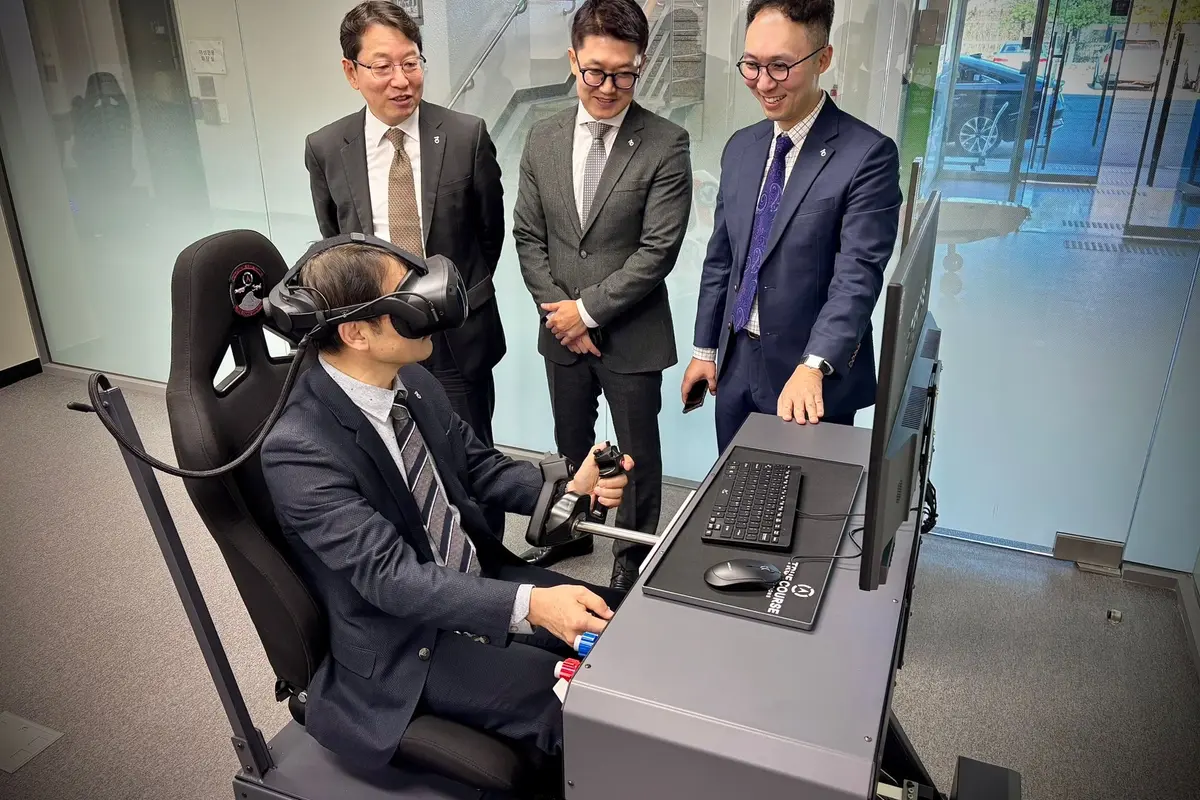
At True Course Simulations, we’ve worked with flight schools and instructors to reshape how pilots learn critical flight skills. Our VR flight simulators are helping student pilots grasp Instrument Flight Rules (IFR) more effectively by offering immersive, risk-free, and repeatable training environments.
What Is IFR and Why Do Student Pilots Struggle With It?
IFR stands for Instrument Flight Rules. Pilots use IFR when they can’t rely on outside visibility, like flying through clouds or at night.
Under IFR, everything depends on instruments: heading, altitude, airspeed, attitude, and navigation. Students must learn to control the aircraft by watching gauges instead of the horizon.
For beginners, it’s hard to focus on that many inputs at once. There’s pressure to perform while keeping up with procedures, communications, and corrections. This makes IFR one of the most challenging phases of pilot training.
It’s also expensive. Every extra hour in the aircraft adds up. And that makes repetition hard to come by.
Why IFR Training Is Difficult for New Pilots
Instrument flying removes the outside visual references that many student pilots depend on during early training. Instead, it requires full reliance on cockpit instruments while managing radio communications, flight plans, and airspace regulations.
The most common student pain points include:
- Interpreting multiple flight instruments simultaneously
- Staying spatially oriented in IMC (Instrument Meteorological Conditions)
- Keeping up with ATC instructions and adjusting flight paths under pressure
- Limited flight hours or instructor availability for practice
These challenges are compounded when students only have access to traditional flight time or full-motion simulators scheduled once a week. Without frequent, focused practice, the learning curve becomes steeper and more stressful.
How VR Flight Simulators Help Students Prepare
Starting IFR prep in a VR simulator removes many barriers that make instrument flying difficult.
Students can:
- Practice in low-stress conditions
- Repeat instrument maneuvers until they stick
- Build scanning habits and procedure flow before real-world distractions
Weather, instructor schedules, or aircraft availability do not limit them. And because it’s a simulation, they can pause, restart, and try again without wasting flight time.
That kind of flexibility helps students feel more prepared when they begin formal IFR training. As we explored in How Virtual Reality Is Making Flight Training More Accessible, accessibility plays a significant role in student success.
5 IFR Skills That Are Easier to Learn in a VR Simulator
1. Basic Instrument Scanning
Instrument flying starts with keeping your eyes on the right gauges. In VR, students can practice the standard “instrument scan” to monitor pitch, power, and bank.
Without outside distractions, they focus purely on building good scanning habits, which are critical for real-world IFR flying.
2. Holding Pattern Entries
Holding entries are tricky at first. VR simulators allow students to practice direct, parallel, and teardrop entries until they understand each one.
Instead of struggling in the air, they learn the logic and muscle memory in a calm environment.
3. VOR Navigation and Intercepts
VORs are core to many IFR routes. With VR, students can tune, identify, and track radials in a simulated airspace.
They’ll get used to intercepting and correcting without the added pressure of turbulence or traffic.
4. ILS and RNAV Approaches
Instrument approaches are one of the most demanding tasks in IFR flying. VR allows students to repeatedly fly ILS or RNAV approaches, focusing on glide slope, localizer, and decision heights.
This practice helps them fly more accurate approaches when they finally do them in the real aircraft.
5. Missed Approach Procedures
It’s not enough to fly a great approach—pilots also need to know what to do when things don’t go as planned.
In a VR simulator, students can rehearse missed approaches step-by-step, learning to climb, navigate, and reset safely.
Improved Procedural Memory and Retention
Cognitive overload is a major hurdle in IFR training. By using VR, students build procedural memory through consistent practice in a stress-free setting. The result? Students spend less time reviewing ground school concepts and more time applying them confidently.
A study from PwC found that learners trained in VR were 275% more confident in applying their skills post-training. That’s a significant edge when preparing for the IFR checkride.
Supporting Flight Instructors and Schools
VR-based IFR training doesn’t replace instructors—it supports them. Certified Flight Instructors (CFIs) can assign modules for students to practice independently. They can review performance data, correct mistakes, and focus in-person lessons on fine-tuning.
This saves instructors time and allows them to serve more students without reducing training quality.
For flight schools, it means less wear on aircraft, reduced operating costs, and fewer scheduling conflicts. Students can train on demand, even during bad weather or maintenance downtime.
VR vs. Traditional Simulators: Which Is More Effective for IFR?
| Feature | Traditional Simulators | True Course VR Flight Simulators |
|---|---|---|
| Cost | High (Hardware, maintenance) | More affordable, portable |
| Accessibility | Fixed at simulator center or airport facility | Available at TCS-equipped schools and training centers |
| Scenario Customization | Limited to available modules and hardware | Supports programmable training scenarios (based on curriculum) |
| Instructor Dependency | Requires live instructor for each session | Can support independent practice under instructor oversight |
| Instructor Dependency | Manual debrief by instructor post-session | Real-time feedback with potential for session playback (check with TCS) |
VR flight simulators don’t aim to replace FAA-certified FTDs or aircraft time. Instead, they accelerate learning, so students use live flight time more effectively.
Looking Ahead to IFR Training?
Instrument flying is one of the most important skills in pilot training. But it doesn’t have to feel overwhelming. Starting with a VR simulator helps students build confidence, improve accuracy, and feel ready to fly with instruments.
At True Course Simulations, we build VR systems that support real learning. They’re built for instructors, students, and flight schools that want smarter, safer, and more consistent teaching methods.